There are certain features of the face that we rarely notice—until something changes.
The earlobe is one of them.
Whether it has stretched over the years from heavy earrings, torn accidentally, become elongated with age, or simply lost its youthful fullness, changes in the earlobe can subtly alter the way jewellery sits and even affect facial balance.
At Magnum Opus, I believe aesthetic surgery isn’t about changing who you are. It’s about restoring harmony. Sometimes, that restoration begins with something as small as an earlobe.
Why Do Earlobes Change?
Unlike the rest of the ear, the earlobe contains no cartilage. It is composed of soft skin and fat, making it particularly vulnerable to stretching and volume loss over time.
Common reasons patients seek treatment include:
- Split or torn earlobes from earrings
- Enlarged piercing holes
- Stretched earlobes from years of wearing heavy jewellery
- Naturally long or asymmetrical earlobes
- Age-related thinning and loss of volume
- Previous piercings that have healed poorly
Many patients are surprised to learn that these concerns are both common and highly treatable.
Earlobe Repair
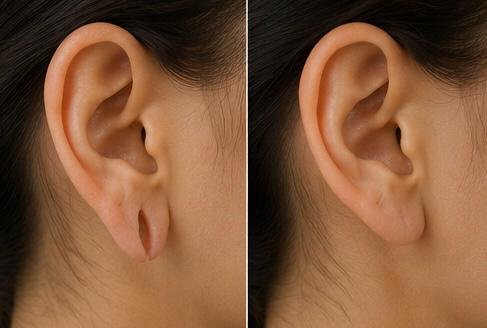
A torn or split earlobe is usually repaired under local anaesthesia as a day-care procedure.
The damaged edges are carefully refreshed, and the earlobe is reconstructed with meticulous layered suturing to recreate a natural contour. Fine plastic surgical techniques are used to minimise scarring while preserving the shape of the lobe.
Following healing, the ear can usually be re-pierced after approximately 6 to 8 weeks, depending on individual healing.
The goal is not simply to close a tear, but to create an earlobe that looks as though the injury never occurred.
Reshaping the Earlobe
Not every patient has a torn earlobe.
Some simply feel their earlobes have become too long, uneven or stretched with time.
In these situations, the earlobe can be carefully reshaped by removing excess tissue and recreating a smaller, more proportionate contour. This subtle refinement often restores balance to the lower face and allows earrings to sit beautifully once again.
As with all facial procedures, less is often more.
The objective is to achieve a result that appears natural rather than surgically altered.
Restoring Volume: Fat Grafting and Fillers
One of the most overlooked signs of facial ageing is volume loss within the earlobes.
As we age, the soft fat within the lobe gradually diminishes. Earrings that once sat upright may begin to droop, and the earlobe itself can appear thin, wrinkled or deflated.
Fortunately, volume can often be restored.
Fat Grafting
Fat grafting involves transferring a small amount of your own fat from another area of the body to restore softness and fullness to the earlobe.
Because your own tissue is used, the result feels completely natural and can provide long-lasting improvement. Fat grafting may be performed as a standalone procedure or combined with other facial rejuvenation surgeries.
Hyaluronic Acid Fillers
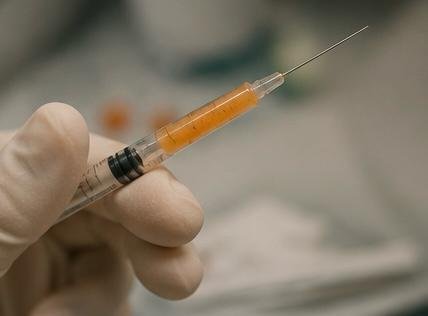
For patients seeking a minimally invasive option, hyaluronic acid fillers can restore lost volume in just a few minutes.
Fillers improve support for earrings, soften wrinkles within the earlobe and create a healthier, more youthful appearance without surgery.
Treatment is performed in the clinic with minimal downtime, and results are immediate.
The Importance of Proportion
The earlobe may seem like a small detail, but aesthetic medicine is built upon details.
An elongated earlobe can make the face appear older. A thin earlobe may make expensive jewellery appear less elegant. Even slight asymmetry can become noticeable once it is corrected.
When restoring the earlobe, I consider its relationship to the cheek, jawline, neck and overall facial proportions—not simply the ear in isolation.
The aim is always harmony.
Recovery
Most patients return to their usual daily activities within a day or two.
Following surgical repair, sutures are typically removed after about one week. Mild swelling is expected and gradually settles over the following weeks.
After fillers, patients can usually resume normal activities immediately.
Your aftercare instructions will be tailored to your procedure to ensure the best possible healing.
Is Earlobe Surgery Right for You?
You may benefit from consultation if you have:
- A split or torn earlobe
- Enlarged or stretched piercing holes
- Earlobes that appear elongated with age
- Loss of volume causing earrings to droop
- Naturally uneven earlobes
- Previous repairs that have healed unsatisfactorily
Every earlobe is unique, and treatment should be personalised accordingly.
A Thought to Leave You With
Plastic surgery is often associated with dramatic transformations.
In reality, some of the most satisfying procedures are the quietest ones.
An earlobe repaired so a cherished pair of earrings can be worn again.
A subtle restoration of volume that brings balance back to the face.
A detail so naturally refined that no one notices the procedure—only that something feels beautifully in harmony.
Sometimes, the smallest changes make the most meaningful difference.