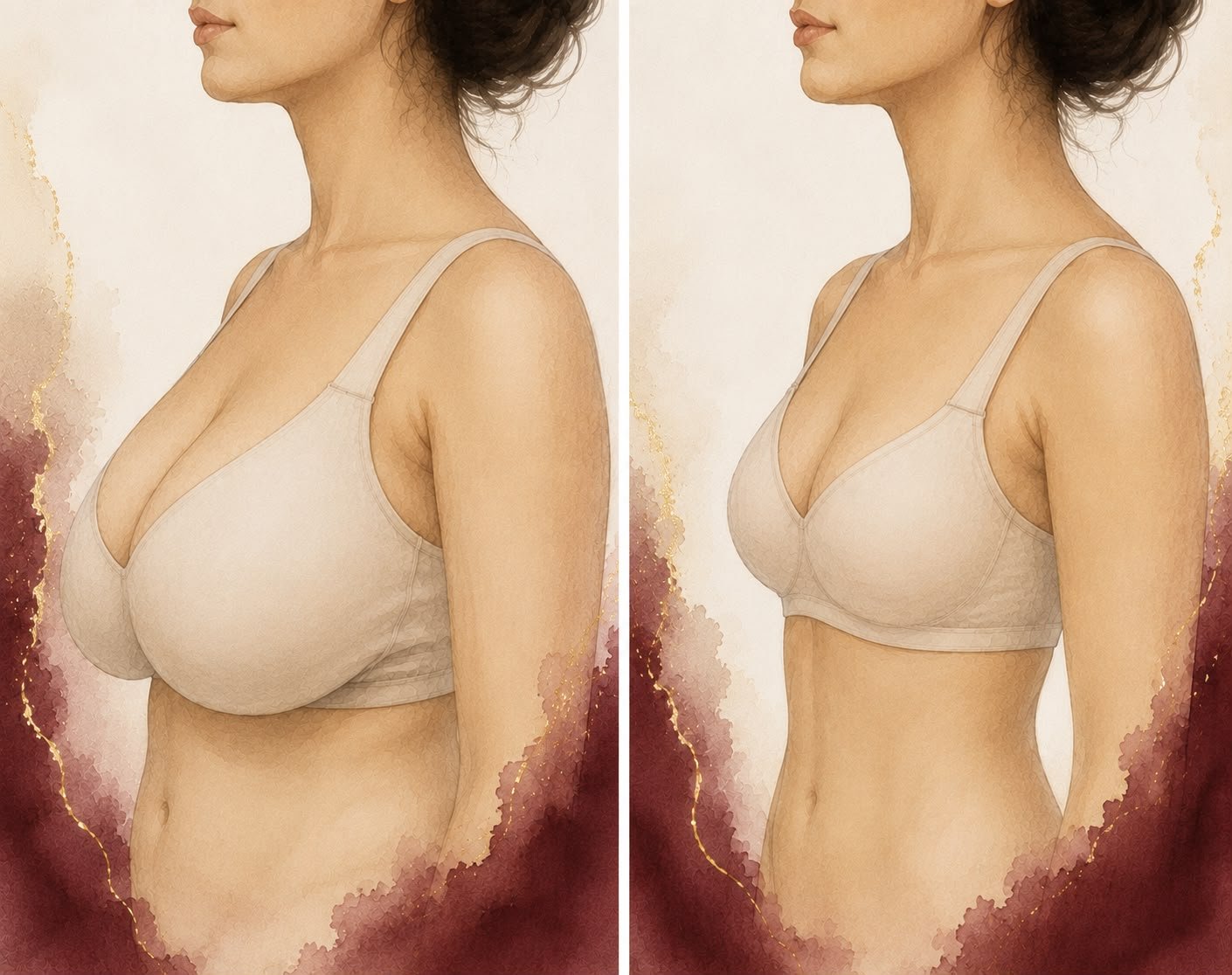
If you are researching mastopexy or breast lift surgery in Bangalore, you may be wondering what the procedure involves, whether it changes breast size, where the scars are placed and how it differs from breast reduction or breast augmentation.
A mastopexy, commonly known as a breast lift, is a plastic surgery procedure that reshapes and repositions the breast.
It may be considered when the breasts have changed in position or shape following pregnancy, breastfeeding, weight fluctuations, ageing or natural changes in skin elasticity.
The aim of the procedure is to create a breast shape that is more balanced and proportionate to the individual’s anatomy and goals.
Watch the Explanation
Understanding Mastopexy
Dr Catherine Samraj explains mastopexy and the way a breast lift changes breast shape and position.
What Is a Mastopexy or Breast Lift?
A mastopexy is a surgical procedure that involves reshaping the existing breast tissue, removing excess skin and repositioning the nipple and areola when required.
It is important to understand that a breast lift is not simply a matter of tightening the skin.
The internal breast tissue is also carefully reshaped to support the new breast contour.
Every breast lift is planned differently. The surgical approach depends on several factors, including:
- The existing breast shape and volume
- The position of the nipple and areola
- The degree of breast descent
- Skin quality and elasticity
- Breast asymmetry
- Previous pregnancy or weight changes
- The individual’s preferred outcome
There is no single technique that is appropriate for everyone.
Why Do Breasts Change in Shape and Position?
Breasts naturally change over time. These changes may occur following:
- Pregnancy and breastfeeding
- Significant weight loss
- Repeated weight fluctuations
- Ageing and changes in skin elasticity
- Changes in breast volume
- Genetic factors
Some people notice that the breast sits lower on the chest than it previously did.
Others may notice a change in nipple position, loss of upper breast fullness or differences between the two breasts.
These changes are normal. A mastopexy is an elective procedure that may be considered by someone who would like to alter the position or shape of the breast.
Does a Breast Lift Make the Breasts Smaller?
A breast lift primarily changes breast shape and position.
It is not designed primarily to increase or significantly reduce breast volume.
However, mastopexy can be combined with other breast procedures depending on the individual’s anatomy and goals.
Mastopexy Alone
A mastopexy reshapes and repositions the existing breast tissue without intentionally adding significant volume.
Reduction Mastopexy
When a reduction in breast volume is also desired, a breast reduction with lift, sometimes called a reduction mastopexy, may be considered.
During this procedure, breast tissue and skin are reduced while the remaining tissue is reshaped and repositioned.
Augmentation Mastopexy
When additional breast volume is desired along with a lift, a mastopexy may be combined with breast augmentation.
The appropriate approach depends on the individual’s anatomy and the result they are hoping to achieve.
Breast Lift vs Breast Augmentation: What Is the Difference?
Although these procedures are sometimes discussed together, they address different concerns.
A breast lift or mastopexy primarily:
- Repositions the breast
- Reshapes existing breast tissue
- Repositions the nipple and areola when required
- Addresses changes in breast position
A breast augmentation primarily:
- Adds breast volume
- Changes breast projection
- May increase upper breast fullness
An augmentation alone may not adequately address significant breast descent.
Similarly, a mastopexy alone does not substantially increase breast volume.
In selected cases, both procedures may be combined.
This is why choosing between a breast lift, breast augmentation, breast reduction or a combination procedure requires an individual assessment rather than selecting a procedure based only on photographs or information online.
Where Are the Scars After a Mastopexy?
Scarring is an important part of any discussion about breast lift surgery.
All mastopexy procedures involve scars.
The location and extent of the scars depend on the amount of reshaping and repositioning required.
Periareolar Scar
The scar is placed around the edge of the areola.
This approach may be suitable for selected individuals requiring a limited degree of repositioning.
Vertical or “Lollipop” Scar
The scar extends around the areola and vertically downward towards the breast crease.
This pattern allows for more significant reshaping of the breast.
Inverted-T or “Anchor” Scar
The scar extends around the areola, vertically downwards and along the breast crease.
This technique may be required when more extensive reshaping or skin removal is needed.
The choice of technique is based on the individual anatomy and the degree of correction required.
Scars usually change in appearance over time as they mature.
However, scar quality varies between individuals, and no surgical scar can be guaranteed to become invisible.
A clear discussion about scar placement should always be part of the consultation before surgery.
Is the Nipple Removed During a Breast Lift?
In most routine mastopexy procedures, the nipple and areola are not completely detached.
They are usually repositioned while remaining connected to a carefully designed segment of tissue called a pedicle.
This helps maintain the blood supply to the nipple–areola complex.
The specific technique used depends on the individual anatomy, the amount of repositioning required and the surgical plan.
Changes in nipple sensation can occur following breast surgery and should be discussed during the consultation.
Who May Consider a Mastopexy?
A consultation for mastopexy may be considered by someone who has noticed:
- A change in the position of the breasts
- A lower nipple position
- Changes in breast shape following pregnancy or breastfeeding
- Changes following significant weight loss
- Loss of upper breast fullness
- Differences in shape or position between the two breasts
- Changes in the size or position of the areolae
There is no single ideal breast shape or position.
The decision to consider surgery is personal and should be based on the individual’s concerns, anatomy, expectations and overall health.
Can a Breast Lift Be Combined With Other Procedures?
Yes. Depending on the individual, a mastopexy may be performed alone or combined with another procedure.
Possible combinations may include:
- Breast reduction with mastopexy when a reduction in breast volume is also desired
- Breast augmentation with mastopexy when additional volume is desired
- Fat grafting in selected cases to address specific areas of volume deficiency
- Other procedures where medically and surgically appropriate
Combination procedures require careful planning.
Not every procedure should necessarily be performed at the same time, and the safest approach depends on the individual patient.
What Is Recovery Like After a Breast Lift?
Recovery after mastopexy varies depending on the extent of surgery, the technique used and whether another procedure has been performed at the same time.
In the early recovery period, patients may experience:
- Swelling
- Bruising
- Tightness or discomfort
- Temporary changes in breast sensation
A supportive post-operative garment may be recommended.
Heavy lifting and strenuous physical activity are generally restricted during the initial healing period.
The breasts do not reach their final appearance immediately after surgery.
Swelling gradually settles, the tissues soften and the scars continue to mature over several months.
Recovery instructions should always be individualised by the treating surgeon.
How Long Do the Results of a Breast Lift Last?
A mastopexy can create a long-term change in breast shape and position, but it cannot stop the natural effects of ageing.
Future changes may occur due to:
- Pregnancy
- Breastfeeding
- Significant weight fluctuations
- Ageing
- Changes in skin elasticity
Maintaining a relatively stable weight may help preserve the surgical result, but every body continues to change over time.
Planning a Mastopexy: Why the Consultation Matters
Breast surgery is highly individual.
Two people may both feel that their breasts have changed after pregnancy or weight loss, yet require completely different surgical approaches.
One person may benefit from a mastopexy alone.
Another may require a reduction with lift.
Someone else may be considering additional volume.
A consultation allows the plastic surgeon to assess:
- Breast shape and volume
- Skin quality
- Nipple and areola position
- Breast asymmetry
- Medical history
- Previous surgeries
- Individual goals and expectations
The purpose of the consultation is to understand what has changed, what the individual would like to address and which options may be appropriate.
Mastopexy Consultation in Bangalore
At Magnum Opus Plastic Surgery & Medical Aesthetics, breast surgery consultations are approached with an emphasis on individual assessment, clear communication and informed decision-making.
During a consultation for mastopexy or breast lift surgery, the discussion may include:
- Whether a breast lift is appropriate
- The type of mastopexy that may be considered
- Expected scar placement
- Whether a reduction or augmentation may also be relevant
- Recovery and post-operative care
- Potential risks and limitations of surgery
The aim is not to fit every patient into the same procedure, but to create a surgical plan based on the individual’s anatomy and goals.